
Random notes: divergence at age 40, silent health struggles, a script for phone boundaries

The following is a series I’ll publish sporadically called “Random notes” for when I didn’t have time to write a more thoughtful post, but still want to get something out to my readers.
It’s a recap of recent shorter “tweet or X-like” posts I’ve published on Substack Notes with some brief commentary on each one.
Basically, what’s top of mind for me at this point in time.
Let’s dive in.
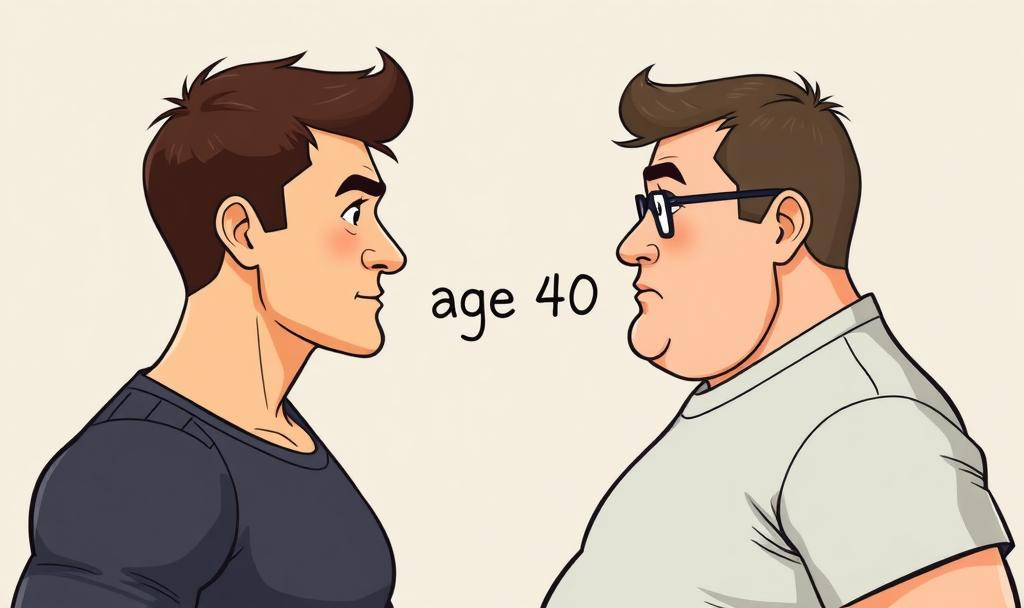
There is no such thing as a 40-year-old who looks 40
This observation stems from years of watching how lifestyle choices compound dramatically by middle age.
The divergence in aging isn’t random. It’s the accumulated result of thousands of daily decisions.
By 40, some people have preserved their vitality through consistent healthy habits, while others have accelerated their biological aging through chronic stress, poor sleep, and inflammatory diets.
What’s fascinating is how this gap continues to widen after 40, with the healthy cohort often maintaining their vitality well into their 60s. This should serve as both motivation and warning: your daily choices are silently determining which side of the divergence you’ll find yourself on.
There’s a big difference bewtween “not sick” and “thriving”
The most dangerous health problems are the ones you can’t feel developing.
Many people operate with a false sense of security because they don’t have obvious symptoms. Yet their inflammatory markers, insulin sensitivity, and hormonal balance are quietly deteriorating.
I’ve seen first-time lab-goers shocked by their bloodwork despite “feeling fine.” The transformation when they finally implement fundamental health practices is remarkable, not just in biomarkers but in energy, mood, and mental health.
The body wants to heal, but it needs the right environmental signals. The gap between “not sick” and “truly thriving” is vast, and most people never experience the latter because they’re satisfied with merely avoiding obvious illness.
Use this script on your kid to normalize not having your phone with you
Kids today are growing up in an environment where immediate digital gratification is the norm. Every moment of boredom or curiosity is satisfied instantly through screens.
By deliberately modeling boundaries with technology, I’m trying to instill something increasingly rare: comfort with undocumented moments and delayed gratification.
The psychological impact of constant connectivity affects developing brains differently than adult ones, and I’ve found that these small moments of saying “no” to my phone create space for deeper connection, imagination, and the valuable skill of being present.
This practice has improved my own relationship with technology and I am hopeful it’s shaping my daughter’s as well.
Thanks for reading. If you want to read all of my notes, you can find them here.
P.S.
If you want to get the most out of this newsletter, consider upgrading to paid. You’ll get access to all my premium content and tools including my 10-minute health tracking system, personal health tracking spreadsheet, and ultimate health product guide.